
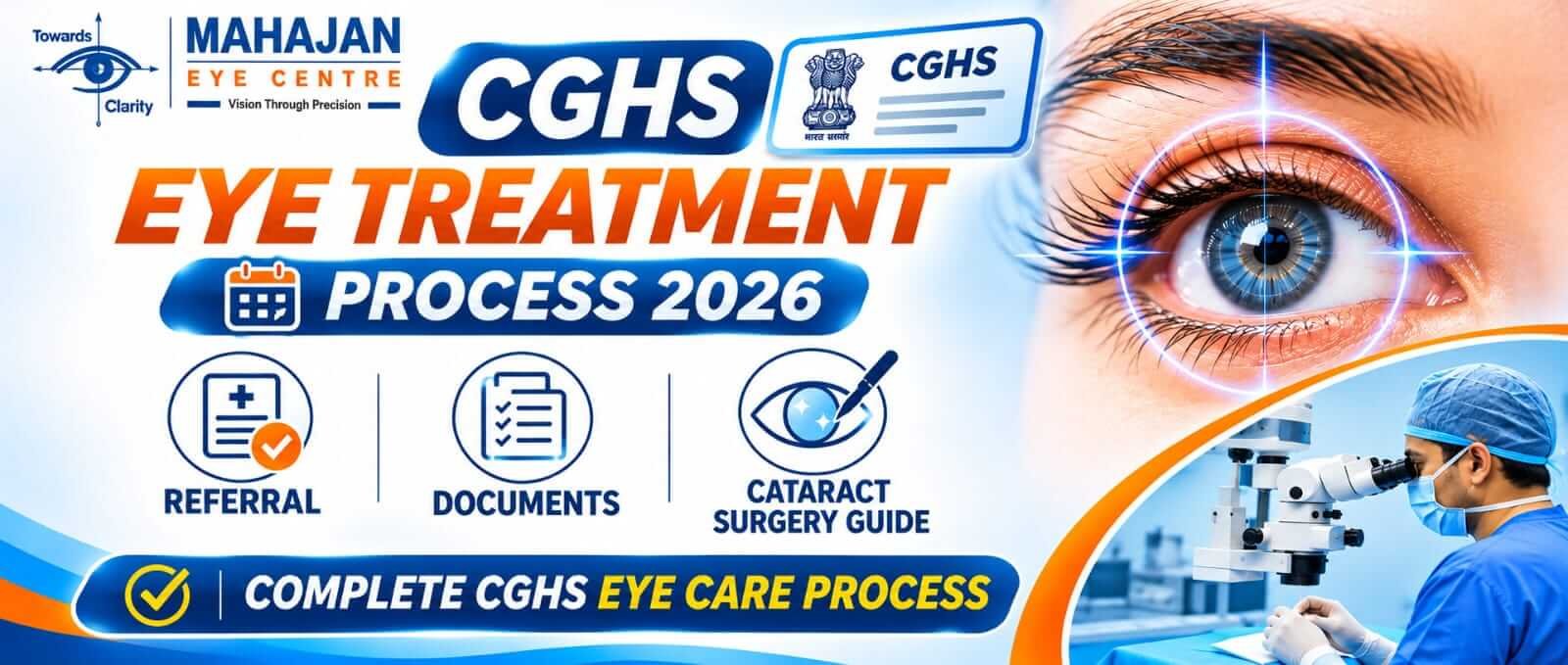
CGHS Treatment Process 2026: Step-by-Step Guide for Eye Patients
Are you a Central Government employee, pensioner or eligible dependent looking for eye treatment under the Central Government Health Scheme (CGHS)? Understanding the process before visiting a hospital can make the experience smoother. Whether you need an eye consultation, diagnostic tests or cataract surgery, the steps depend on your beneficiary category, the type of treatment and the current CGHS rules.
This guide explains the general process for planned eye treatment at a CGHS-empanelled private hospital. Always confirm the latest instructions with your CGHS Wellness Centre and the hospital’s CGHS desk before proceeding.
1. Check your CGHS eligibility and card details
Start by checking that your CGHS card is valid and that the patient’s name is included as an eligible beneficiary. Keep the card or a copy of the relevant e-card details ready. The hospital may also ask for identity proof and previous medical records.
If the patient is a dependent family member, confirm that the dependency and beneficiary details are correctly reflected in the CGHS records.
2. Understand whether a referral is required
For treatment at a private CGHS-empanelled hospital, referral requirements depend on the beneficiary’s age, the service required and the applicable CGHS instructions. Under the revised referral framework, beneficiaries aged 70 years and above have provisions for direct specialist consultation and listed investigations or procedures, subject to the applicable conditions. Other beneficiaries generally need to follow the referral process through a CGHS Wellness Centre for specialist consultation.
A referral issued by a CGHS Medical Officer may remain valid for a specified period and may support follow-up consultations. Requirements can differ for admission-based procedures, special investigations and unlisted procedures. Do not assume that a referral for consultation automatically authorises every surgery or investigation.
3. Visit a CGHS-empanelled eye hospital
Check that the hospital is currently empanelled for the relevant ophthalmology service and that the specific procedure is covered under the applicable CGHS package or approval process. Empanelment can be specialty- and service-specific, and lists or terms may be revised.
At the hospital, the CGHS or panel desk will review the beneficiary details, referral or permission documents, and the reason for consultation. Carry previous prescriptions, eye reports, current medication details and any earlier surgery records.
4. Complete the eye examination and investigations
The ophthalmologist will assess the patient’s symptoms and eye condition. Depending on the diagnosis, investigations may include visual acuity testing, refraction, slit-lamp examination, eye pressure measurement, retinal evaluation, biometry or other tests.
For cataract surgery, the doctor assesses the cataract and the overall health of the eye before recommending surgery. The choice of intraocular lens (IOL) is a clinical decision based on eye measurements, ocular health, visual needs and applicable package provisions.
5. Understand approval and authorisation for planned treatment
If admission or a procedure requires prior referral, endorsement or authorisation under the applicable CGHS rules, the hospital will guide the beneficiary on the required documents and submission process. Listed and unlisted procedures may follow different approval routes. If a procedure is not included in the applicable package list, additional permission may be necessary.
Ask the hospital to explain the proposed procedure, the applicable package, what is included and whether any item may be outside the approved package. Obtain clarification before treatment wherever possible.
6. Treatment, discharge and claim documentation
Once the required clinical and administrative steps are complete, treatment can proceed. For eligible beneficiaries and approved services, treatment at an empanelled hospital may be provided on a cashless or credit basis in accordance with CGHS rules and the hospital’s empanelment terms.
At discharge, collect the discharge summary, prescriptions, investigation reports, advice for follow-up and any documents provided by the hospital. Follow the doctor’s instructions and attend scheduled reviews.
7. What if the case is an emergency?
In a genuine medical emergency, the referral and approval process may be different from planned treatment. CGHS instructions provide specific provisions for emergency treatment at empanelled hospitals. The treating hospital must document the emergency and follow the prescribed reporting and claim process.
Do not delay urgent medical attention while trying to arrange routine referral paperwork. Seek emergency care first and inform the hospital about the CGHS beneficiary status.
Documents patients should keep ready
- Valid CGHS card or e-card details
- Referral or permission document, where applicable
- Photo identity proof
- Previous eye prescriptions and medical records
- Relevant investigation reports
- List of current medicines and known allergies
- Any prior approval or authorisation communicated for the planned procedure
Frequently asked questions
Q. Is cataract surgery covered under CGHS?
Cataract surgery may be covered when the beneficiary, hospital, procedure and package requirements are satisfied. The applicable package, lens options and approval requirements should be confirmed before surgery.
Q. Can a CGHS beneficiary visit a private eye hospital directly?
This depends on the beneficiary’s age and the current referral rules. Many planned specialist consultations require a referral, while specific provisions apply to beneficiaries aged 70 years and above. Confirm the rule for your case before visiting.
Q. Does a referral for consultation automatically approve surgery?
Not necessarily. Admission-based procedures, special investigations and unlisted procedures may require additional referral, endorsement or authorisation.
Q. What should I do if the hospital asks for additional documents?
Ask the CGHS desk to specify the missing document or approval and contact your CGHS Wellness Centre or the relevant CGHS authority if clarification is needed.
Conclusion
Knowing the CGHS process can help patients prepare the right documents and understand the steps involved in eye treatment. Since referral rules, package rates and empanelment terms may change, verify the latest requirements before planning a procedure.
Patients considering cataract or other eye treatment can consult the ophthalmology team at Mahajan Eye Centre, Pitampura, for a clinical evaluation and guidance on the documentation process applicable to their case. Treatment eligibility and cashless or credit facility remain subject to current CGHS rules and approvals.


