
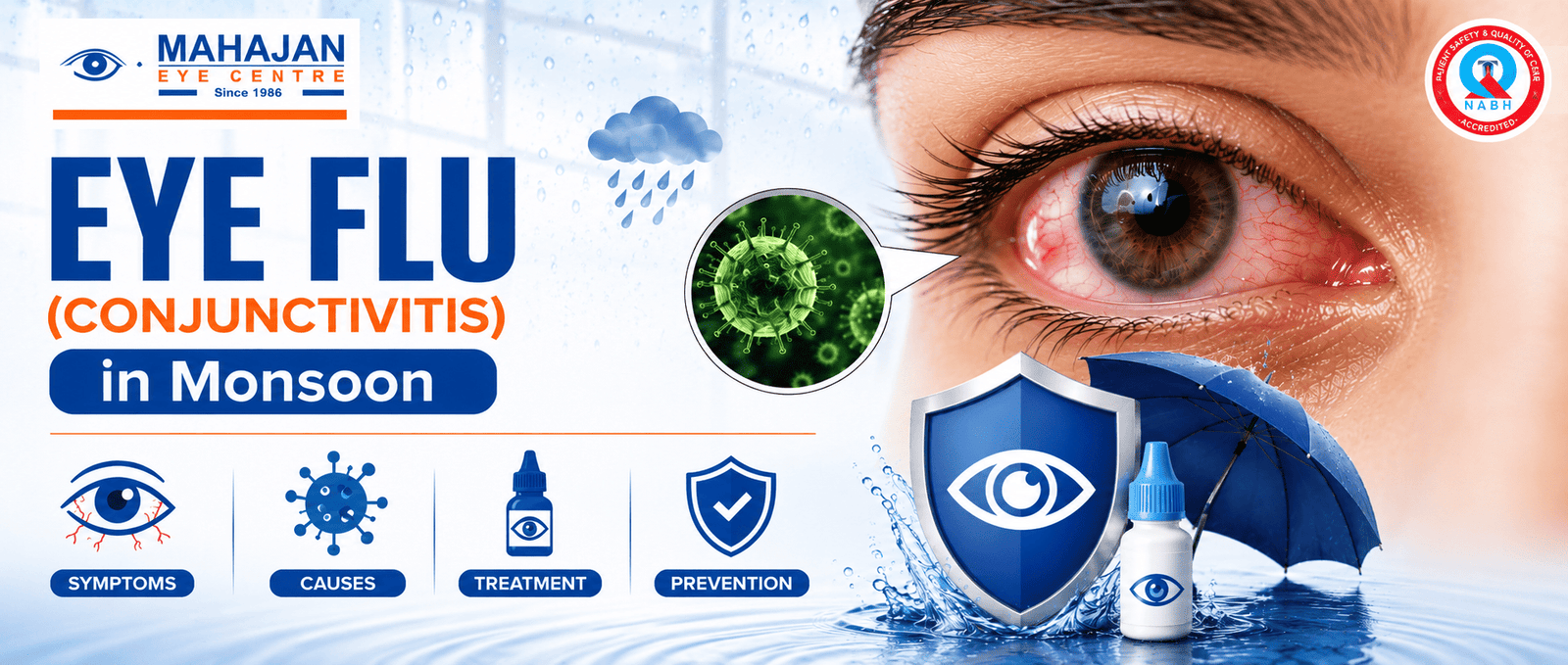
Eye Flu (Conjunctivitis) in Monsoon: Symptoms, Causes, Treatment & Prevention
The monsoon season brings much-needed relief from the summer heat, but it also creates ideal conditions for the spread of infections, including eye flu (conjunctivitis). Every year, hospitals and eye clinics witness a significant rise in patients experiencing red, itchy, watery eyes during the rainy season. Eye flu is highly contagious and can spread quickly among family members, school children, and office colleagues if proper precautions are not taken.
Although eye flu is generally a mild condition, delaying treatment or ignoring symptoms can lead to complications, especially in individuals with weakened immunity or pre-existing eye conditions. Understanding its symptoms, causes, treatment options, and preventive measures can help protect your vision and reduce the risk of spreading the infection.
What is Eye Flu (Conjunctivitis)?
Eye flu, medically known as conjunctivitis, is an inflammation of the conjunctiva—the thin, transparent membrane that covers the white part of the eye and the inner surface of the eyelids.
Conjunctivitis can be caused by:
- Viral infections (most common during monsoon)
- Bacterial infections
- Allergies
- Environmental irritants
During the rainy season, viral conjunctivitis is the most common form and spreads rapidly through direct or indirect contact with infected individuals.
Why Does Eye Flu Increase During the Monsoon?
The rainy season creates a humid environment that encourages the growth and spread of viruses and bacteria. Waterlogging, increased humidity, poor hygiene, and crowded public places make it easier for infections to spread.
Common reasons include:
- High humidity encourages viral survival.
- Frequent touching of the eyes with unclean hands.
- Sharing towels, handkerchiefs, or cosmetics.
- Exposure to contaminated water.
- Reduced immunity due to seasonal illnesses.
These factors make monsoon one of the peak seasons for conjunctivitis outbreaks.
Common Symptoms of Eye Flu
Symptoms usually appear within a few days after exposure and may affect one or both eyes.
Common symptoms include:
- Redness in the eyes
- Excessive watering
- Itching or irritation
- Burning sensation
- Swollen eyelids
- Sticky discharge, especially in the morning
- Sensitivity to light
- Blurred vision due to excessive tearing
- Feeling like something is stuck in the eye
If you experience severe pain, significant vision loss, or persistent symptoms, seek immediate medical attention.
How Does Eye Flu Spread?
Eye flu is highly contagious. It spreads through:
- Direct contact with infected eye secretions
- Touching contaminated surfaces
- Sharing towels or pillow covers
- Sharing eye makeup or cosmetics
- Poor hand hygiene
- Close contact in schools, offices, and public transport
Contrary to popular belief, simply looking into someone's infected eyes does not spread conjunctivitis. The infection spreads through contaminated hands or objects.
How to Prevent Eye Flu During Monsoo
- Use a good lubricating eye drop for dryness
- Increase indoor humidity
- Avoid direct heater airflow
- Wear sunglasses during the day
- Control diabetes & blood pressure
- Ensure proper lighting while reading or working
These small steps help reduce winter-related vision discomfort.
Mahajan Eye Centre – Safe & Advanced Cataract Care
We offer:
- MICS Cataract Surgery
- Accurate IOL Power Calculation
- Latest monofocal, multifocal &toric lenses
- Quick, painless, same-day procedure
- Expert surgeons & advanced technology
Your comfort and vision clarity are our priority.
Book Your Winter Cataract Consultation
If your cataract symptoms are increasing this season, don’t wait. Early evaluation ensures better outcomes.


